

Blog
What's the Real Difference Between Crochet vs Knitting?

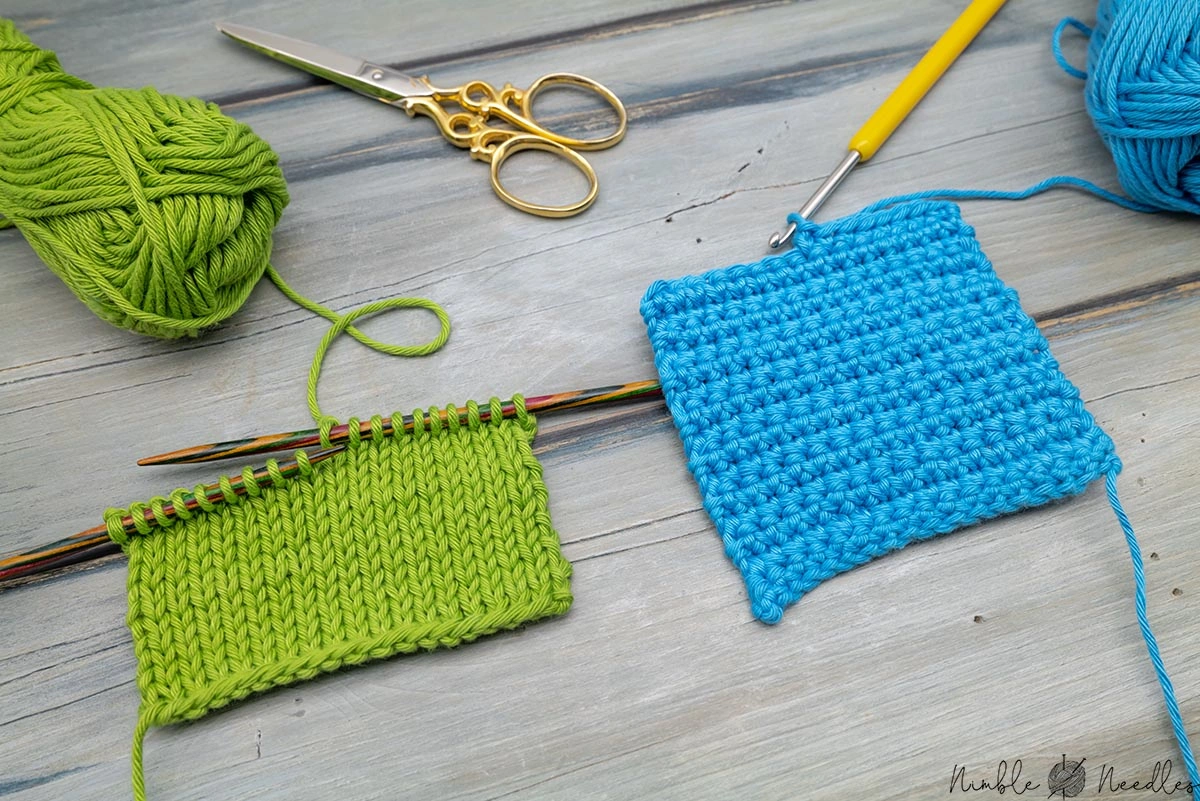
The crochet vs knitting debate has sparked discussions among craft enthusiasts, and the numbers speak volumes. Ravelry hosts 574,047 knit patterns and 340,631 crochet patterns. Both crafts have strong followings. The difference between crochet and knitting goes beyond pattern availability though. Knitting uses two needles and multiple live stitches. Crocheting works with a single hook. We'll break down everything from tools and learning curves to project speed, so you can decide which craft fits your style best.
Basic Definitions: Crochet vs Knit
What is Knitting?
Knitting creates textile fabric through the process of interlooping yarn with a pair of needles. The technique involves forming interconnected loops that intermesh with previous and following rows. You cast on a specific number of stitches to begin, then work the fabric row by row and transfer loops from one needle to another.
The stitches form a V-shape that gives knitted fabric its characteristic appearance. Multiple stitches remain active on the needles at the same time, and this sets knitting apart from other yarn crafts. Newly created loops pull through one or more loops from the prior row as each row forms and move to the gaining needle. This prevents the previous row from unraveling. Knitters work with at least two needles, though more advanced techniques can involve up to five double-pointed needles.
What is Crocheting?
Crochet derives from the French word meaning "hook". The craft uses a single crochet hook to interlock loops of yarn and creates textiles through a method that differs from knitting. Crocheters start with a slip knot followed by a chain and form stitches that resemble small knots rather than interlocking loops.
The hook draws yarn through loops to create stitches such as single, double and treble crochet. Crochet completes each stitch before moving to the next one, and this contrasts with knitting's continuous row of active stitches. The stitches loop onto the piece without transferring between tools. This creates a more structured fabric where each stitch consists of several loops entwined together.
The Core Structural Difference
The structural difference between crochet vs knitting goes beyond tool selection. Knitting keeps a whole row of stitches active at the same time, with each stitch supported by corresponding stitches in rows above and below. The loops hang off the needle and transfer from one side to the other, loop by loop.
Crochet operates differently. Only one live stitch sits on the hook at a time, except in variant forms like Tunisian crochet. Each stitch completes on its own before the next begins. This structural variation explains why dropped stitches in knitting can unravel a whole column, while missed stitches in crochet rarely interfere with the fabric's integrity. The knitting vs crochet difference in stitch construction affects how each fabric behaves, stretches and holds its shape.
Tools and Materials Comparison
Knitting Needles: Types and Sizes
Knitting requires two needles working together, and the variety can overwhelm newcomers. Single-pointed needles measure 10-14 inches with stoppers on one end and suit flat projects knitted in pieces. Circular needles feature two short tips connected by a flexible cord, with lengths calculated from tip to tip ranging from 16 to over 40 inches. Double-pointed needles come in 6 or 8-inch sets and are used for socks and small circumference projects.
Sizing adds another layer of complexity. Knitting needles have measurements in both millimeters and US sizes, ranging from 1.5mm (US 000) to 35mm (US 70). What complicates matters further is that you must think over both diameter and length before purchasing needles. A US 8 needle might come as a 10-inch straight, a 24-inch circular, or an 8-inch DPN. Each serves different purposes.
Quality interchangeable needle sets can cost around $300, especially when you need both standard and shorties sets with various cord lengths. Despite the investment, many knitters accumulate numerous needles because circular needles come in different lengths and sizes.
Crochet Hooks: Simplicity and Variety
Crochet hooks offer refreshing simplicity. You work with a single hook. The only measurement that matters is diameter. Hook sizes range from 2.25mm (B-1) to 30mm (T/X) in standard hooks, with steel hooks using an inverse numbering system for fine lacework.
The cost advantage is substantial. You can purchase three metal hooks for about $4 at Walmart, whereas three pairs of knitting needles cost around $7. Simple aluminum hooks from brands like Boye or Susan Bates remain inexpensive and are virtually indestructible. Wooden or plastic hooks may break, but decent metal or alloy hooks last a lifetime and won't set you back more than a couple dollars per hook.
Materials vary from aluminum and plastic to bamboo, wood, and ergonomic designs with cushioned grips. Whatever the material, crochet hooks remain cheaper because you only need to care about diameter, whereas knitting requires managing different lengths for the same diameter.
Yarn Requirements and Costs
Crochet uses more yarn than knitting, though the exact difference sparks debate. Crochet can use 30-40% more yarn by weight for items of the same size at equivalent gages. Single crochet and knitted garter stitch use about the same amount, but crochet stitches are denser because of how they wrap around themselves.
This density creates heavier fabric and affects project costs. Despite crochet using more yarn, the lower tool investment often balances the overall expense for beginners.
Essential Accessories for Both Crafts
Both crafts require accessories that are much the same. Tapestry needles with blunt tips weave in ends, with metal needles gliding through stitches more smoothly than plastic versions. Sharp scissors handle yarn cutting, and flexible tape measures track gage and project dimensions. Stitch markers prove useful in crochet for tracking rounds, while knitters use them to mark pattern repeats or increases.
Learning Curve: Is Crochet or Knitting Easier?
Opinions split when comparing learning curves. One experienced crafter summed it up: "Crochet is harder to go from 0 to 1 but knitting is harder to go from 1 to 10". This captures the fundamental challenge. Crochet requires more complex original hand movements, but knitting becomes trickier as patterns advance.
Hand Movements and Coordination
Hand-eye coordination requirements differ between the crafts. Children who can tie their shoes possess the motor skills needed to work needles and yarn at the same time in knitting. Crochet demands like coordination, though some struggle more with using both hands on their own.
Ergonomics play a bigger role than many expect. You can prevent repetitive stress injuries by switching between knitting and crochet because the movements are opposite between crafts. Some crocheters develop de Quervain's tenosynovitis after extended work, which makes them switch to knitting in most cases. Others find crochet causes less hand pain, though this depends on hand position and technique.
Reading and Following Patterns
Pattern complexity varies. Knitting patterns read as standard sentences for many crafters, whereas crochet patterns can seem intimidating at first. Both crafts use extensive abbreviations and symbols to save space, from stitches (K for knit, P for purl, SC for single crochet) to complex techniques.
The abbreviation systems require memorization. Knitting employs asterisks, brackets, and parentheses to indicate repeats, like algebraic formulas. Crochet uses similar symbols but applies them in different ways. Parentheses in crochet define groups of stitches worked into the same stitch, while brackets indicate specific repetitions.
Counting Stitches and Tracking Progress
Tracking methods show distinct differences. Each ridge in garter stitch represents 2 rows in knitting, with hidden rows creating V-shapes between ridges. Stockinette stitch requires identifying individual V-shaped stitches in a single column for accurate counts.
Crochet counting focuses on the anatomy of stitches. Each stitch creates a P-shape, and you count either the posts or the V-shapes on top. Stitch markers become essential, especially when placing them every 10 or 20 stitches on larger projects.
Fixing Mistakes and Troubleshooting
Crochet proves more forgiving when errors occur. Dropping a stitch in crochet sets you back only a few stitches, whereas knitting requires work to recover dropped stitches. Knitters can ladder dropped stitches back up using a crochet hook, but this demands precision.
Fixing mistakes in knitting offers more options through lifelines, tinking (knitting backwards), or strategic frogging despite this advantage.
Finished Product Characteristics
Fabric Texture and Drape
Knitted fabric shows little V-shapes or uniform bumps and creates a smoother texture than crochet. The interlocking loops produce thinner fabric that feels more supple, which explains why t-shirt fabric uses the same stitch formation method as knitting. Crochet yields a thicker, loopier fabric where each stitch acts as its own distinct element. The fabric behaves differently because crochet has more yarn wrapped around itself. This uses more material per square inch and creates more rigid results.
Drape refers to how fabric flows, hangs and conforms to shapes. Knitted fabric excels here because the interlocking loops allow natural flexibility. Crochet produces denser, more structured fabric that limits drape. But larger hook sizes and open lace stitches can improve crochet's drape substantially. The choice between knitting and crochet for drape depends on your project needs: flowing garments favor knitting, while structured items benefit from crochet's stability.
Thickness and Yarn Usage
The thickness difference stems from stitch construction. Crochet fabric contains more wrapped yarn because each stitch involves pulling yarn through multiple loops. This creates denser textile compared to knitting's single-loop method. Stockinette knit fabric feels much thinner than single crochet made from similar yarn.
Speed of Project Completion
Crochet finishes projects 2-3 times faster than knitting when creating the same amount of fabric. The stitches are larger, meaning 400 crochet stitches cover substantially more area than 400 knit stitches. After an evening of crochet, you'll see substantial progress. Knitting's smaller stitches make advancement less obvious.
Best Projects for Each Craft
Knitting creates ideal garments like sweaters, cardigans and socks because the elastic fabric drapes naturally and conforms to body shapes. The smoother texture works for clothing worn against skin. Crochet excels at blankets, toys and decorative items where structure matters. Amigurumi (stuffed animals) suits crochet especially well because the dense fabric prevents stuffing from showing through.
Pattern Availability and Design Options
Where to Find Patterns
Pattern databases offer thousands of options for both crafts. Ravelry stands as the largest repository and functions as a complete database where users can search, filter and add patterns themselves. The platform hosts over 574,000 knit patterns and 340,000 crochet patterns. This makes it essential to find designs across skill levels of all types.
Yarnspirations provides nearly 10,000 free patterns for both knitting and crochet. Designers create them and experts test them before publication. LoveCrafts and Purl Soho maintain extensive free pattern libraries with clear instructions. Lion Brand requires a free account to access their pattern collection. These platforms dominate the market, but smaller sites like AllFreeCrochet, Knitty.com and even YouTube channels offer additional resources.
Local libraries often carry knitting and crochet ebooks in their digital catalogs. This provides another free avenue to find patterns. Instagram hashtags like #freeknittingpatterns surface new designs on a regular basis.
Complexity and Flexibility
Pattern quality varies by a lot between the crafts. Knit pattern writers provide more detailed instructions and better technical editing than crochet pattern designers, typically. Many crochet patterns suffer from inadequate testing and unclear directions. One crafter noted finding "made to measure" crochet patterns that skip size grading and tech editing.
Crochet offers greater flexibility for freehanding and modifying patterns on the fly, despite this. The craft excels at shape-forming and non-rectangular designs. Knitting favors flat fabric construction. Crochet patterns prove easier to adapt because stitches work independently.
Machine vs Handmade Considerations
Machine knitting exists but comes with major limitations. Not all hand knit stitches and techniques translate to machines. To match machine stitch gage to hand knit patterns takes 3-4 swatches. Most machine-made patterns look outdated, and this forces crafters to spend hours adapting hand knit designs.
Machines cannot replicate crochet. Each stitch must be made independently. Machines cannot guarantee yarn positioning for proper hook manipulation. Machine technology could achieve crochet in theory, but the cost and maintenance would eliminate any profit incentive.
Comparison Table
Crochet vs Knitting Comparison Table
| Attribute | Knitting | Crochet |
|---|---|---|
| Main Tool | Two needles (or more for advanced techniques) | Single hook |
| Tool Origin | Not mentioned | French word meaning "hook" |
| Active Stitches | Multiple stitches remain active on needles at once | Only one live stitch on hook at a time (except Tunisian crochet) |
| Stitch Appearance | Distinctive V-shape | Resembles small knots; P-shape |
| Stitch Structure | Loops interlock and intermesh with previous and following rows | Each stitch completes on its own; loops entwined together |
| Tool Size Range | 1.5mm (US 000) to 35mm (US 70) | 2.25mm (B-1) to 30mm (T/X) for standard hooks |
| Tool Cost | ~$7 for three pairs of needles at Walmart; quality interchangeable sets ~$300 | ~$4 for three metal hooks at Walmart; metal/alloy hooks last a lifetime at couple dollars each |
| Tool Complexity | Must think over both diameter and length | Only diameter matters |
| Yarn Usage | Uses less yarn | Uses 30-40% more yarn by weight for items similar in size |
| Fabric Thickness | Thinner, single-loop method | Thicker and denser; more yarn wrapped per square inch |
| Fabric Texture | Smoother with little V-shapes or uniform bumps | Thicker and loopier; each stitch is a distinct element |
| Fabric Drape | Excellent; flexible and flows naturally | More structured and rigid; drape is limited (can improve with larger hooks and open stitches) |
| Project Speed | Slower; smaller stitches mean progress is less obvious | 2-3 times faster; stitches are larger and cover more area |
| Learning Curve | "Harder to go from 1 to 10" - becomes trickier as patterns advance | "Harder to go from 0 to 1" - hand movements are more complex at first |
| Pattern Reading | Reads as standard sentences for many crafters | Can seem intimidating at first |
| Fixing Mistakes | Dropped stitches can unravel the whole column; requires precision to fix | More forgiving; a dropped stitch sets you back only a few stitches |
| Best Projects | Garments (sweaters, cardigans, socks) that need drape and elasticity | Blankets, toys, decorative items and amigurumi that need structure |
| Pattern Availability (Ravelry) | 574,047 patterns | 340,631 patterns |
| Pattern Quality | More detailed instructions and better technical editing | Often suffers from poor testing and unclear directions |
| Design Flexibility | Favors flat fabric construction | Greater flexibility for freehanding; excels at forming shapes and non-rectangular designs |
| Machine Production | Possible but with major limits; not all stitches translate to machines | Cannot be replicated by machine; each stitch must be made on its own |
| Motor Skills Required | Children who can tie shoes have the needed skills | Similar coordination; some struggle more with using both hands on their own |
| Stitch Counting | Count V-shaped stitches; each ridge in garter stitch = 2 rows | Count posts or V-shapes on top of P-shaped stitches |
Conclusion
The crochet vs knitting debate doesn't have a clear winner. Both crafts serve different purposes. Knitting wins for garments that need drape and elasticity, while crochet excels at structured items and finishes projects faster. What you want to create determines your choice.
Crochet tools cost less upfront on a tight budget. Knitting gives you smoother fabric for wearables. Crochet's larger stitches will satisfy you more when you're impatient to see progress.
The best approach? Try both crafts and see which strikes a chord with your style and project goals.


