

Blog
How Do You Spell Crochet? Master Crochet Abbreviations and Definitions

What is Crochet?
Crochet is a needlework technique that involves using a hooked needle to create fabric by interlocking loops of yarn or thread. The term crochet, spelled c-r-o-c-h-e-t, derives from the French word crochet, meaning "hook," which itself comes from the Germanic word croc. This craft technique produces textiles through a process of creating and weaving loops with a single hooked tool.
The fundamental characteristic distinguishing crochet from knitting lies in how stitches are formed. Knitting uses two needles and keeps multiple stitches open at once. Crochet employs a single hook and completes each stitch before proceeding to the next one. This structural difference creates distinct fabric textures and construction methods between the two crafts.
The simple crochet process begins with forming a slip knot on the hook, then creating a foundation chain of interlocked loops. Crafters work either in rows or in rounds depending on the desired outcome from this foundation. Row work involves crocheting back and forth to form flat pieces, such as blankets or dishcloths. Round work proceeds in a circle to create tubular items or shapes that build outward from a center point.
Crochet hooks are manufactured from materials of all types, including aluminum, steel, wood and bamboo, and come in different sizes. This technique's versatility allows creation of many items, such as blankets, scarves and intricate lacework. The craft requires familiarity with specific terminology and abbreviated instructions that are the foundations of crochet pattern language, enabling crafters to follow designs and create consistent results across projects.
Essential Crochet Abbreviations and Definitions
Crochet patterns employ standardized abbreviations that condense instructions and boost readability across designs. These shortened forms represent stitches, techniques, and procedural directions that crafters must decode to execute patterns.
Stitch abbreviations (ch, sc, dc, tr)
Ch denotes chain stitch, the foundational element in most crochet work. Sc represents single crochet, the most basic stitch that creates tight, dense fabric. Dc shows double crochet, a taller stitch that produces more open, flexible fabric. Tr (or trc) signifies treble crochet, also called triple crochet, which creates the tallest standard stitch. Additional height variations include hdc (half double crochet) and dtr (double treble crochet).
Post stitch terms (FP, BP, BPdc, FPdc)
FP designates front post stitches, worked by inserting the hook from front to back around the post of a stitch. This pushes that stitch forward. BP shows back post stitches, executed by inserting the hook from back to front around the post. The stitch moves backward. FPdc specifies front post double crochet, while BPdc denotes back post double crochet. These techniques extend to other stitch heights, including FPsc, BPsc, FPhdc, BPhdc, FPtr, and BPtr.
Pattern instructions (inc, dec, tog, rep)
Inc directs crafters to increase by adding one or more stitches. Dec instructs to decrease by eliminating stitches. Tog means together and appears in combinations like dc2tog (double crochet 2 stitches together) or sc2tog. Rep signals repeat and tells you that instructions should be executed again.
Color and yarn terms (MC, CC, CA, CB)
MC represents main color, the primary yarn shade in a project. CC denotes contrasting color. Patterns may specify multiple contrasting colors as CC1, CC2, or use letter designations like CA and CB.
Project status terms (WIP, FO, UFO)
WIP identifies a work in progress, a project currently being created. FO has dual meanings: finished object or fasten off. UFO refers to unfinished objects, projects started but not completed.
Common Crochet Terminology and Vocabulary
Specialized vocabulary are the foundations of effective communication within the crochet community and include technical terms for techniques, materials, and project classifications.
Amigurumi
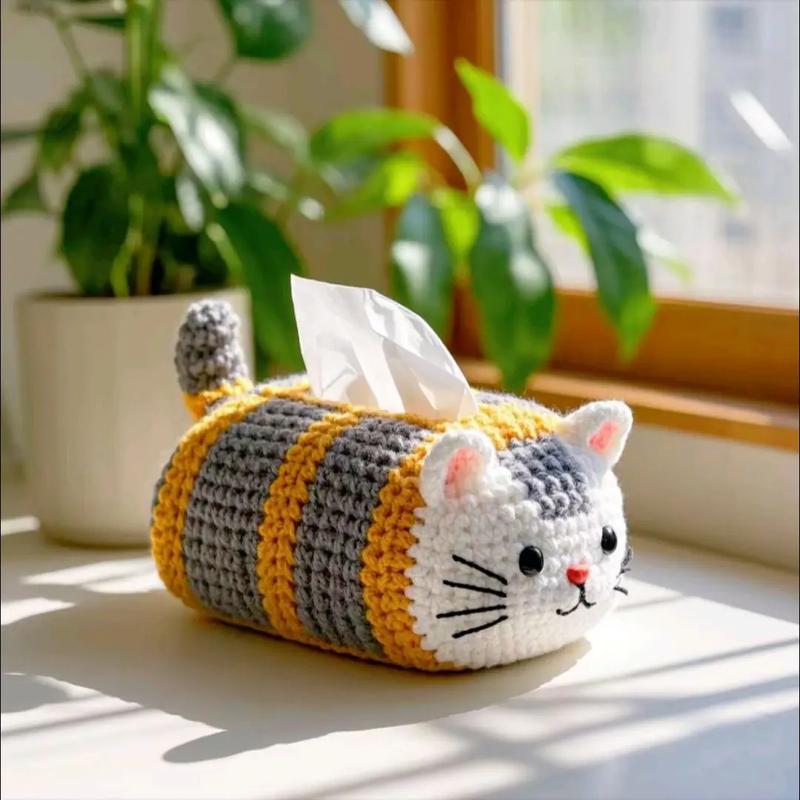
Amigurumi is the Japanese art of crocheting or knitting small, stuffed yarn creatures. The word combines the Japanese terms ami (crocheted or knitted) and kurumi (wrapping). These items are worked in spiral rounds using single crochet stitches to prevent visible seams. The technique employs hooks no larger than 3.5mm and uses cotton, acrylic, or blends of these fibers.
Blocking
Blocking is the finishing process that shapes crochet items through moisture and tension application. Methods include dry blocking (stretching without water), wet blocking (full immersion), steam blocking, and pin blocking. Steam blocking can transform acrylic yarn to achieve silk-like drape and sheen.
Frogging
Frogging refers to unraveling stitches from a crochet project. The term derives from the phrase "rip it, rip it," which phonetically resembles a frog's "ribbit". This technique allows correction of mistakes or repurposing of yarn from abandoned projects.
Gage
Gage is the measurement of stitches and rows within a specific fabric area, typically 4 inches by 4 inches. Patterns specify gage to ensure projects achieve intended dimensions and yarn usage. Hook size adjustments modify gage when tension is different from pattern specifications.
Magic ring
A magic ring (or magic circle) is an adjustable loop technique for starting circular crochet projects. This method eliminates the center hole that alternative starting techniques leave. The ring closes by pulling the tail end after completing the required stitches.
Skein and ball
A skein is yarn sold commercially and wrapped in an oblong oval shape with center-pull access. A ball represents hand-wound yarn wrapped in circular form. Crocheters must wind skeins into balls or cakes before use, accomplished with swift and ball winder tools.
Stash
Stash refers to a crafter's accumulated yarn collection. Collections often include premium yarns reserved for special projects, scraps for stuffing or small projects, and materials acquired before skill development refined priorities.
Yarn weight
Yarn weight indicates the thickness or diameter of yarn strands. The Craft Yarn Council created eight standard categories numbered 0 through 7: lace, super fine, fine, light, medium, bulky, super bulky, and jumbo. Weight selection affects fabric drape, project size, and appropriate hook pairing.


